
Tourism in hill stations like Manali and Shimla never really stops. From families escaping the summer heat to couples visiting during winter snowfalls, these destinations remain active almost throughout the year. For hotels operating in such regions, maintaining a seamless guest experience is not optional — it is essential.
And one of the most basic expectations every guest has is simple: reliable hot water.
In colder climates, a warm shower is not a luxury. It is a necessity.
The real challenge begins during peak morning hours. Between 7 AM and 10 AM, multiple guests across different rooms start their day at the same time. Showers run simultaneously, and hot water demand spikes sharply. If the system is not designed to handle this load, problems appear immediately.
Water temperature becomes inconsistent. Pressure drops. Guests receive lukewarm or cold water. At the same time, electricity consumption rises significantly.
Even a few complaints can impact online reviews — and in hospitality, reputation directly affects revenue.
Many hotels still rely on individual electric geysers. While they may work for small setups, they fail under scale. Running dozens of units simultaneously leads to high energy costs and unreliable performance.
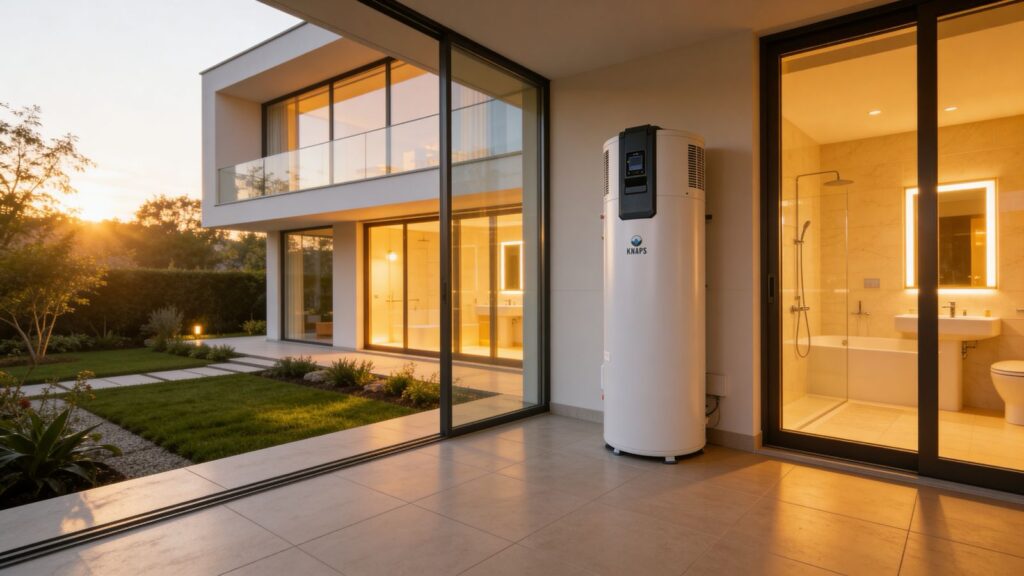
This is why modern hospitality infrastructure is shifting toward centralized heat pump systems. Instead of generating heat using electricity, these systems extract heat from the surrounding air and transfer it into water.
The result is consistent performance, lower energy consumption, and reliable hot water supply even during peak hours.
Because in hill-station hospitality, a perfect hot shower isn’t just comfort — it’s part of the guest experience.