
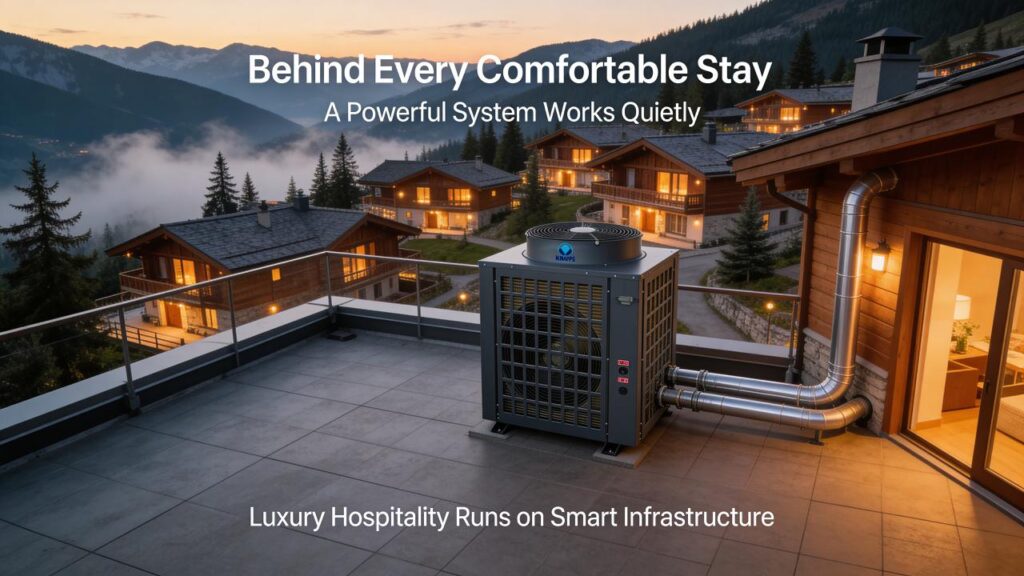
When guests visit a luxury mountain resort, they notice the view, the design, and the comfort. Everything feels effortless — the room is warm, the shower works perfectly, and hot water is always available.
But what guests don’t see is the infrastructure that makes all of this possible.
Luxury resorts in locations like Mussoorie, Manali, Gulmarg, and Sikkim operate like complex ecosystems. They manage water supply, energy usage, heating systems, and guest expectations simultaneously. Among all these systems, one of the most critical yet invisible is the hot water infrastructure.
Unlike small hotels, resorts operate at scale. Multiple villas, cottages, rooms, spas, and kitchens all depend on a continuous supply of hot water. During peak hours, dozens of guests may be using hot water at the same time.
If the system is not designed properly, issues begin to surface. Temperature fluctuations, delays in supply, rising energy costs, and frequent maintenance problems can disrupt the experience.
Traditional electric geysers are not built for this scale. Installing them across multiple rooms leads to inefficiency and high operational costs.
This is why resorts are increasingly shifting toward centralized systems powered by heat pump technology. These systems extract heat from the surrounding air instead of generating it directly through electricity.
This allows them to produce large volumes of hot water with significantly lower energy consumption.
The result is a seamless guest experience supported by a reliable and efficient backend system.
Because in luxury hospitality, the best infrastructure is the one guests never notice but always feel.