
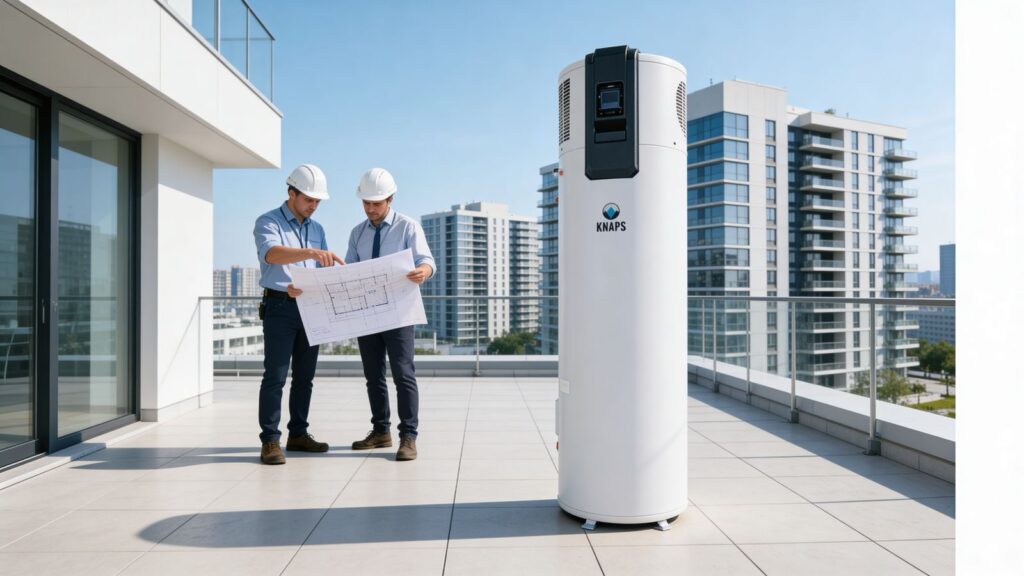
Installing a heat pump system is not just about placing equipment on a terrace and connecting a few pipes. Its performance depends heavily on proper planning and engineering evaluation.
Before installation, engineers assess several critical factors to ensure the system delivers reliable and efficient performance.
The first factor is hot water demand. This includes understanding the number of bathrooms, guest rooms, usage patterns, and peak demand hours. For example, hotels experience peak demand in the morning, while residential usage varies based on household size.
The second factor is storage capacity. Heat pump systems typically work with insulated storage tanks. Proper sizing ensures that hot water is available during peak hours without sudden drops in temperature.
The third factor is installation location. Since heat pumps extract heat from the surrounding air, they require proper airflow. Engineers usually select rooftops, terraces, or open utility areas for optimal performance.
The fourth factor is plumbing design. Efficient distribution of hot water across the property is essential. Poor insulation or routing can lead to heat loss and reduced efficiency.
Finally, engineers evaluate long-term performance. A well-designed system reduces electricity consumption and ensures consistent operation over time.
Heat pump systems are not just products they are infrastructure solutions.
And when designed correctly, they deliver reliability, efficiency, and long-term value.
Because in modern buildings, comfort is not accidental it is engineered.