
The Comfort Guests Expect
In the hospitality industry, guest comfort is everything.
Hotels and resorts invest heavily in creating beautiful spaces—luxurious rooms, elegant interiors, scenic locations, and premium amenities. Every detail is designed to ensure that guests have a comfortable and memorable stay.
However, behind this visible luxury lies a network of systems that quietly support the guest experience.
One of the most important of these systems is hot water infrastructure.
Guests expect hot water instantly and consistently. Whether it’s an early morning shower, a relaxing bath after a long day of travel, or routine housekeeping operations, hot water is essential to the hospitality experience.
When hot water supply is reliable, guests rarely notice it.
But when it fails—even briefly—it becomes immediately obvious.
The Real Energy Demand Behind Hospitality
Hotels operate very differently from residential homes.
In a typical household, hot water usage is spread throughout the day among a small number of people.
In hotels and resorts, however, the demand is constant and much larger.
Dozens or even hundreds of rooms require hot water simultaneously. Guests wake up in the morning and shower around the same time. Kitchens require hot water for cleaning. Housekeeping and laundry operations depend on hot water throughout the day.
This creates continuous demand for water heating systems.
Traditional water heating systems usually rely on electric heaters or boilers that generate heat directly using electricity or fuel.
As demand increases, these systems consume more energy in order to maintain the required water temperature.
For large hospitality properties, this repeated energy consumption can significantly increase operational costs.
The electricity used to maintain hot water supply becomes a hidden but substantial part of the overall utility expenses.
Why Traditional Systems Struggle
Traditional heating systems work well in smaller settings, but they often struggle under the heavy demand of large hospitality operations.
When many rooms require hot water at the same time, conventional systems must work harder to keep up with the demand. This can lead to higher electricity usage, slower reheating cycles, or inconsistent supply.
In some cases, hotels may install larger heating units to compensate for the demand. However, this approach often increases energy consumption even further.
Over time, the cost of maintaining hot water supply becomes a major operational expense.
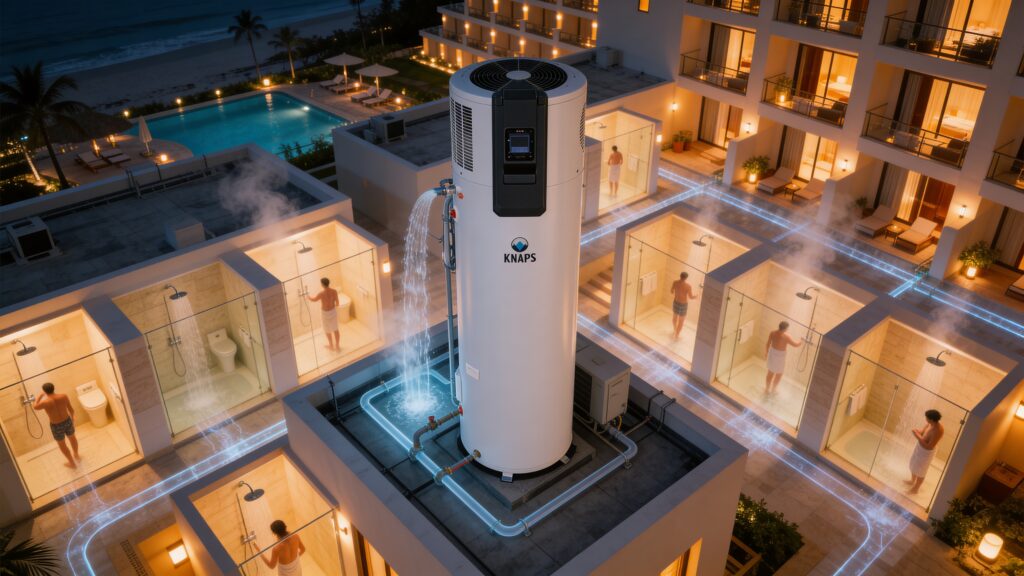
Because these systems are located in utility areas or rooftops, they are rarely seen by guests.
But their impact on energy consumption and operational efficiency is significant.
A Smarter Approach to Hospitality Infrastructure
Modern hospitality infrastructure is beginning to adopt more efficient heating technologies.
Heat pump systems provide a smarter alternative to traditional water heating methods.
Instead of generating heat directly using electricity, heat pumps capture heat from the surrounding air and transfer it into the water.
Because the system moves heat rather than creating it, the amount of electricity required is significantly lower.
For hotels and resorts, this efficiency can dramatically reduce energy consumption while still providing reliable hot water supply for guests.
At the same time, these systems are designed to handle continuous demand, making them ideal for hospitality environments where hot water usage is constant.
Comfort and Efficiency Can Work Together
In hospitality, guest comfort should never be compromised.
But delivering that comfort efficiently is equally important.
Energy-efficient infrastructure allows hotels and resorts to maintain reliable services while reducing operational costs.
Guests may never see the heating systems that power their showers or supply hot water to their rooms.
Yet these invisible systems play a crucial role in shaping the overall guest experience.
The hidden cost of hot water can be significant.
But with smarter technology and intelligent infrastructure, hospitality properties can deliver comfort in a far more efficient way.