
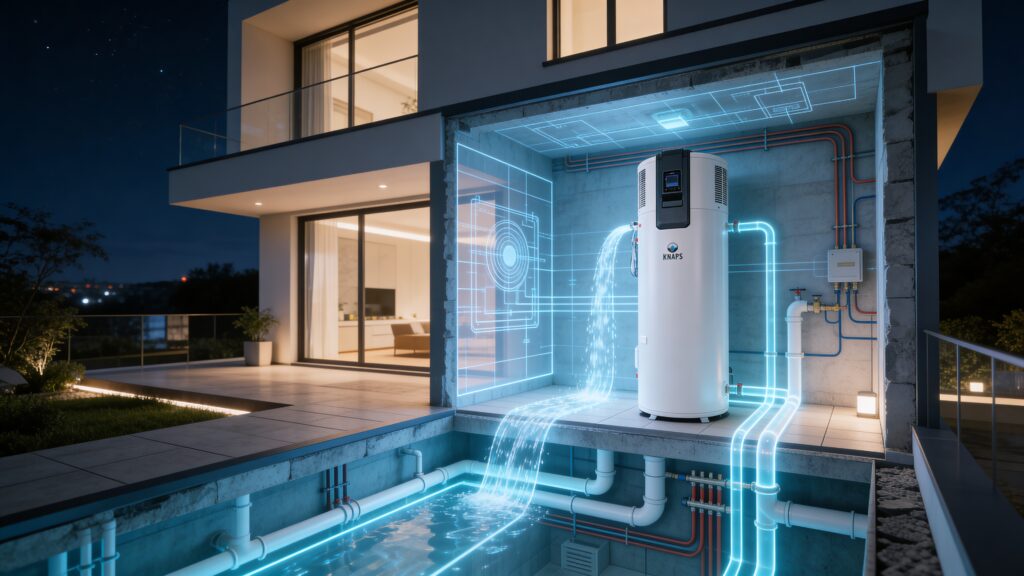
The Systems We Rarely Notice
When people receive their electricity bills, the first reaction is usually the same.
Most homeowners immediately think about visible appliances. Air conditioners, refrigerators, washing machines, and lights are often blamed for consuming the most electricity.
While these appliances certainly contribute to energy usage, they are not the only systems responsible for rising electricity bills.
In fact, some of the most energy-intensive systems inside a building are almost completely invisible.
They operate quietly behind the walls, on rooftops, or inside utility areas, working every day without drawing attention.
One of the most important examples of such infrastructure is the water heating system.
Because it works silently in the background, most homeowners rarely think about it—until the hot water suddenly stops.
Yet the system responsible for producing hot water plays a major role in a building’s overall energy consumption.
The Hidden Energy Demand of Hot Water
Hot water is used many times throughout the day.
Morning showers, kitchen work, laundry, cleaning activities, and evening routines all depend on hot water supply. In homes with multiple bathrooms or larger families, this demand becomes even higher.
Traditional water heaters generate heat by converting electricity directly into thermal energy.
While this process is simple and widely used, it requires a significant amount of electricity to maintain water temperature.
Every time hot water is used, the system must reheat the tank again.
This repeated heating cycle happens dozens of times every week.
Over months and years, this continuous energy usage contributes significantly to electricity consumption.
Because the system is not visible like other appliances, homeowners often overlook how much energy it actually consumes.
Why Infrastructure Decisions Matter
The most important thing about infrastructure systems is that they last for many years.
When a heating system is installed during construction or renovation, it becomes part of the building’s long-term energy structure.
Unlike appliances that can easily be replaced, infrastructure systems are rarely changed frequently.
This means that the decision made at the time of installation can affect electricity usage for decades.
Choosing an inefficient system can lead to higher energy consumption year after year.
On the other hand, choosing an intelligent system can significantly reduce energy demand throughout the building’s lifetime.
That is why modern construction is increasingly focusing on smarter infrastructure.
Builders, architects, and homeowners are beginning to understand that efficiency should start with the systems that operate behind the scenes.
Smarter Technology for Efficient Living
Modern heating technologies are transforming how hot water systems operate.
Instead of generating heat directly from electricity, advanced systems use a more efficient method—transferring heat from the surrounding air into water.
This technology is known as a heat pump.
Because heat pumps move heat instead of producing it from electricity, they require significantly less energy to operate.
The result is a system that provides reliable hot water while reducing electricity consumption.
For homeowners, this means lower energy bills and improved efficiency.
For hotels, resorts, and commercial buildings, the impact can be even more substantial due to higher hot water demand.
The Power of Invisible Systems
When we think about modern homes or buildings, we often focus on architecture, interior design, and visible luxury.
However, the true performance of a building is determined by the systems working quietly in the background.
Plumbing, electrical networks, and heating infrastructure all influence how efficiently a building operates.
Water heating is one of the most important parts of this invisible infrastructure.
The system may not be visible every day, but its impact is reflected in comfort levels and energy bills.
In many ways, the systems we rarely notice are the ones that matter the most.
Invisible infrastructure quietly shapes everyday efficiency.
And sometimes, the smartest decisions are the ones that happen behind the walls.